
What is is and how do I know what’s best for me?
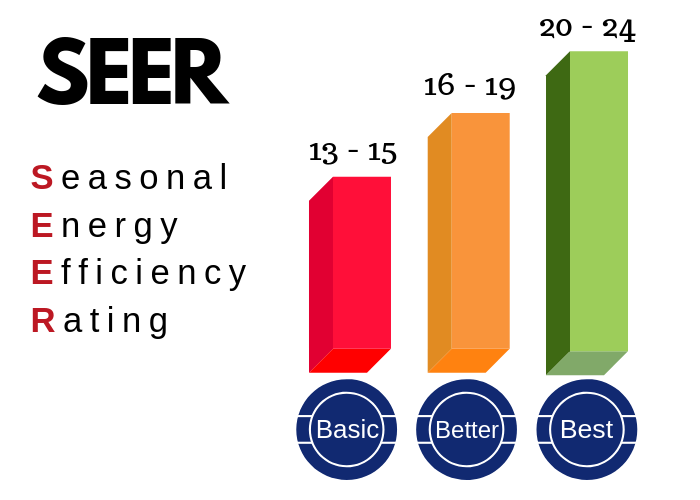
The SEER rating for most HVAC units is determined by a national organization called AHRI (Air-Conditioning, heating, and Refrigeration Institute). Although not a governmental institute, the AHRI is an association of all North American manufacturers with a concentration in HVAC equipment. In order to calculate the SEER rating for each particular unit, the AHRI measures the unit’s average cooling output versus the energy it consumes to provide that particular level of cooling.
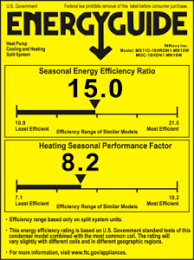
Typically, the higher the SEER rating, the more efficiently the unit uses electricity. Sometimes on the EnergyGuide labels, you will see a range of SEER ratings – this is because sometimes you can pair that unit with a range of other equipment to meet whatever your specific need may be. For example, you may need to utilize an indoor unit with a lower fan speed due to the way that your ductwork was designed in your house – and that will alter the overall efficiency of the outdoor unit, which may have been designed to operate most optimally with a higher fan speed.

“So what does all of this mean for me??”
Just like any major decision, when it comes time to replace your HVAC equipment in your home, you need to decide what options work best for you. Higher SEER models will save you money over time, reducing the total load on the electrical system of your home. But lower SEER models will save you money in the short term, as the equipment is typically more inexpensive.
When in doubt about what the difference in SEER rating could mean for your home in particular, don’t be afraid to ask. At the very least, you can take comfort in knowing that if you do upgrade your equipment, newer models will almost always be more efficient than the units they are replacing.
 Green Home Energy Solutions, LLC
Leave a comment